📏 Table of Contents (Tap to Collapse)
Quick Summary
- Avoid the "Toy" Trap: Drums under 10 inches cannot produce deep bass notes or long sustain.
- The Golden Standard: 12 to 13 inches is the most versatile size for portability and professional sound.
- The Bass Choice: 14 to 15 inches is required for 15-note scales and deep meditation frequencies.
One of the most common questions I get at my workshop is: "Can I just buy the small mini-drum? It's cheaper and cuter."
My answer is usually: It depends. Do you want a toy, or an instrument?
In the world of acoustics, size isn't just a physical dimension—it's the engine of sound. Just as a ukulele cannot produce the deep bass of a cello, a small tongue drum cannot match the resonance of a large one. Let's break down the physics of size so you don't waste money on a drum that sounds thin and "tinny."
1. The "Resonance Rule" (Physics of Size)
Sound waves need space to develop. This is called the Helmholtz Resonance principle.
A tongue drum works by vibrating the air inside its hollow chamber.
Larger Chamber = More Air = Deeper Bass + Longer Sustain.
If the drum is too small (under 10 inches), the air volume is insufficient to support low frequencies (like C4 or D4). This is why small drums are high-pitched and have a short "decay" (the sound dies out quickly).
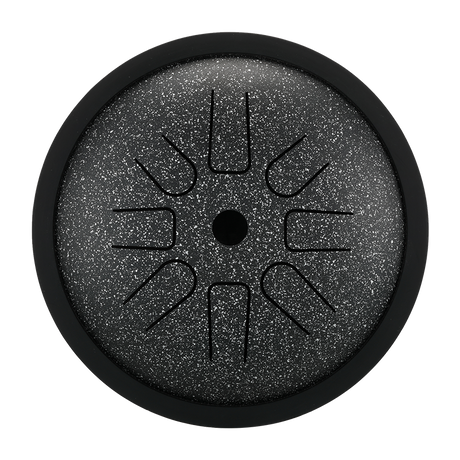
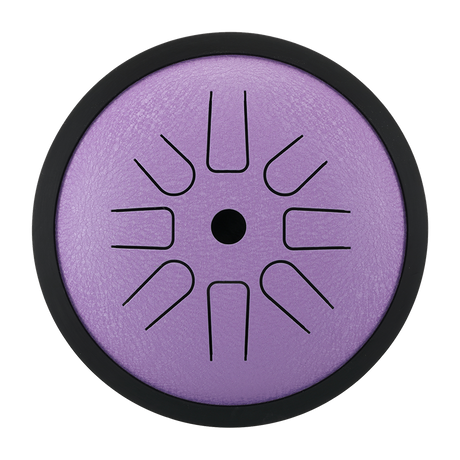
2. Small Drums (6 to 8 Inches)
These are often sold as "Mini" or "Pocket" drums. They are extremely popular as gifts because of their low price point ($20-$40).
- Pros: Extremely portable (fits in a backpack), great for children's small hands, cheap.
- Cons: Limited range (usually only 6-8 notes), high-pitched sound (no bass), short sustain. The notes can sound "clunky" rather than "singing."
- Verdict: Excellent for kids under 8 years old or as a desk ornament. Not suitable for serious meditation or learning songs.
Hear the "Size Effect"
Listen to the sustain difference between a 6-inch mini drum and a 14-inch professional drum. The difference is shocking.
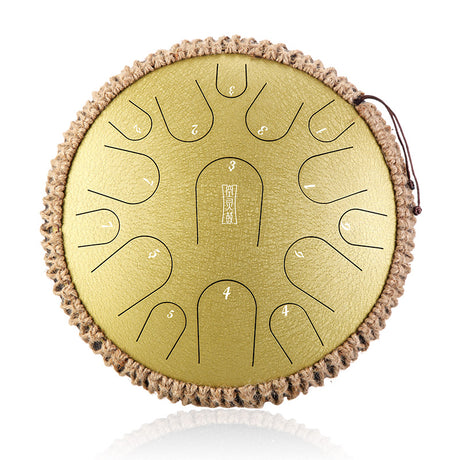
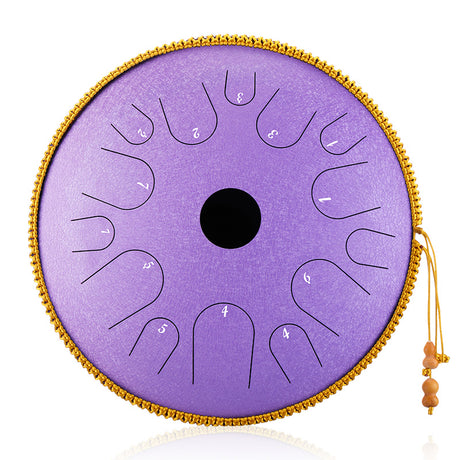
3. Medium Drums (12 to 13 Inches)
This is the Industry Standard. If you are a beginner adult, start here.
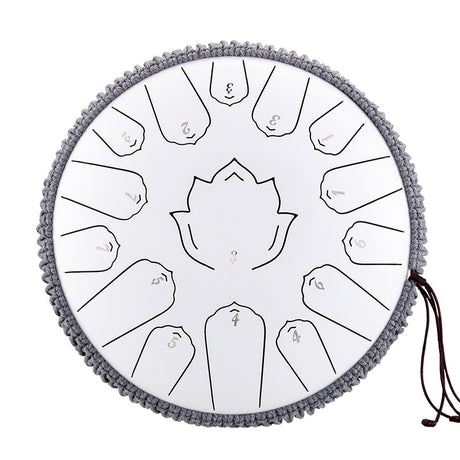
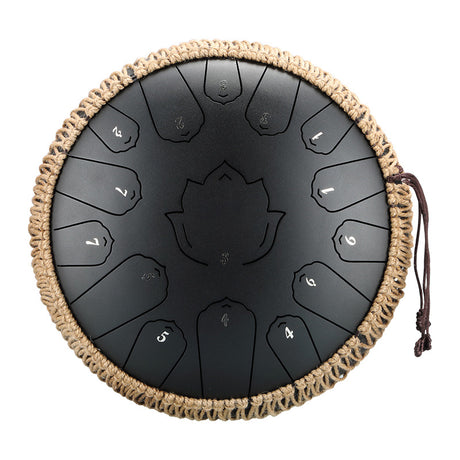
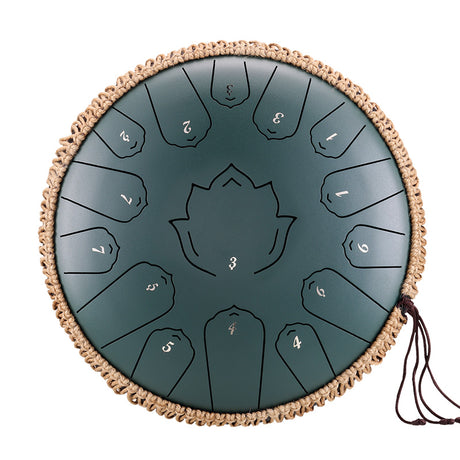
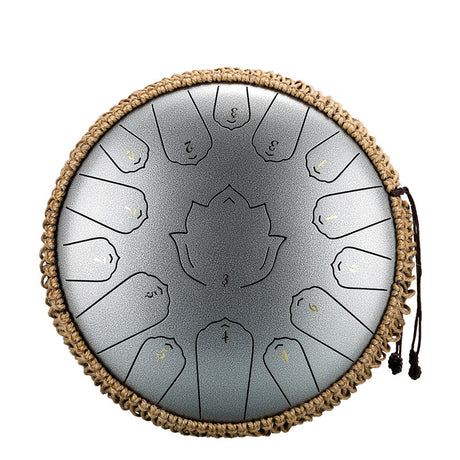
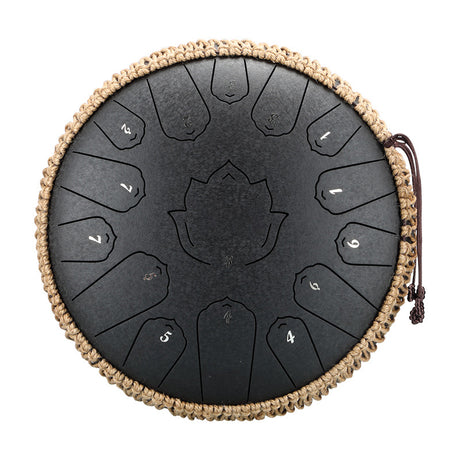
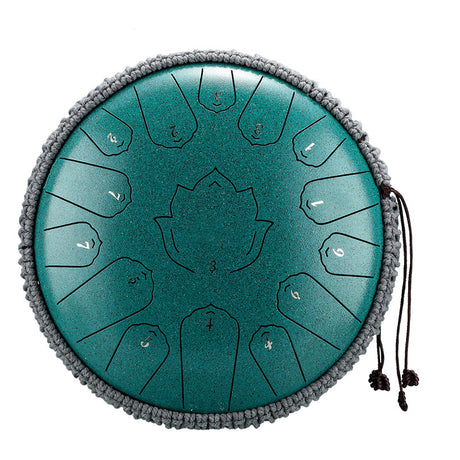
A 12-inch drum provides enough surface area to cut 11 to 13 tongues without them interfering with each other (crosstalk). The internal chamber is large enough to create a warm, resonant mid-range tone.
- Pros: Perfect balance of weight (approx 3kg) and sound quality. Fits on your lap comfortably.
- Cons: Cannot reach the "Double Octave" range of larger drums.
- Verdict: The "Goldilocks" size. Perfect for 90% of users.
4. Large Drums (14 to 15 Inches)
These are the heavyweights of the tongue drum world, often used by professional sound therapists and yoga instructors.
Because the surface is huge, we can fit 15 notes on these drums. This gives you a full two octaves, allowing you to play complex melody and harmony simultaneously. The sound is profound, watery, and fills a whole yoga studio.
- Pros: Richest sound, longest sustain (4+ seconds), widest musical range.
- Cons: Heavy (4-5kg) and bulky to travel with.
- Verdict: Essential for sound healing and advanced musicians.
5. Size Comparison Table
Use this chart to match the size to your lifestyle.
| Size Class | Note Range | Sustain Time | Best Use Case |
|---|---|---|---|
| Mini (6") | 8 Notes | Short (~1 sec) | Kids / Hiking / Gift |
| Standard (12") | 11-13 Notes | Medium (~3 sec) | Beginner Learning / Home |
| Pro (14-15") | 15 Notes | Long (4-5 sec) | Performance / Meditation |
Conclusion
So, what is the best size? If you prioritize sound quality over portability, go bigger. A 14-inch drum will give you a sound that wraps around your soul. If you need something to carry to the park or beach, a 12-inch model is your best friend. Just remember: friends don't let friends buy 6-inch drums for meditation!

![Buy One Get One Free - HLURU Tongue Drum Flagship Duo - Microalloyed Steel 14" 15 Note Flagship and 6" 8 Note High Pitch Extension Tongue Drum [Engravable]](http://www.hluru.net/cdn/shop/files/4314d7859af8173cfeabd2ec82606eec.png?v=1761902169&width=460)
![Buy One Get One Free - HLURU Tongue Drum Flagship Duo - Microalloyed Steel 14" 15 Note Flagship and 6" 8 Note High Pitch Extension Tongue Drum [Engravable]](http://www.hluru.net/cdn/shop/files/d18931792f42db6cad0425bb408c8fbd.png?v=1761902169&width=460)
![Buy One Get One Free - HLURU Tongue Drum Flagship Duo - Microalloyed Steel 14" 15 Note Flagship and 6" 8 Note High Pitch Extension Tongue Drum [Engravable]](http://www.hluru.net/cdn/shop/files/0ee52f9e59e0bd412f602e1aa459ff5f_d7e276e6-d00c-4b17-9b06-0013facd6adf.png?v=1761902169&width=460)
![Buy One Get One Free - HLURU Tongue Drum Flagship Duo - Microalloyed Steel 14" 15 Note Flagship and 6" 8 Note High Pitch Extension Tongue Drum [Engravable]](http://www.hluru.net/cdn/shop/files/e5142852154df54a0f8e743222a7bf5f_da0b025d-89c7-4aab-bcf2-5855a5ad8550.png?v=1761902169&width=460)
![Buy One Get One Free - HLURU Tongue Drum Flagship Duo - Microalloyed Steel 14" 15 Note Flagship and 6" 8 Note High Pitch Extension Tongue Drum [Engravable]](http://www.hluru.net/cdn/shop/files/005ae8333fa1842990565ae33f7ba822.png?v=1761902169&width=460)
![Buy One Get One Free - HLURU Tongue Drum Flagship Duo - Microalloyed Steel 14" 15 Note Flagship and 6" 8 Note High Pitch Extension Tongue Drum [Engravable]](http://www.hluru.net/cdn/shop/files/c340b9ba91df466c93fe7ac81a7586fe_a7b555a3-735a-4978-bca4-9544c28b6bcd.png?v=1761902169&width=460)
![Buy One Get One Free - HLURU Tongue Drum Flagship Duo - Microalloyed Steel 14" 15 Note Flagship and 6" 8 Note High Pitch Extension Tongue Drum [Engravable]](http://www.hluru.net/cdn/shop/files/eb7bd7f5af6ed635582c7d394eeff8bd_9469ba15-7352-4102-800c-11dc61e392d0.png?v=1761982655&width=460)
![Buy One Get One Free - HLURU Tongue Drum Flagship Duo - Microalloyed Steel 14" 15 Note Flagship and 6" 8 Note High Pitch Extension Tongue Drum [Engravable]](http://www.hluru.net/cdn/shop/files/654d7d7a6a5a883c65121abfe72ac53a_685b3d39-9c6e-40ed-8f2f-ca46a4cd519f.png?v=1761902169&width=460)