



📖 Table of Contents
Key Takeaways
- The Golden Range: The 16-string lyre adds a crucial lower octave (G3, A3, B3) that 7-string or 10-string models lack, allowing for richer, fuller arrangements.
- Bass Notes Matter: In the tabs below, look for numbers with a dot underneath (e.g., 5̣). These are your thickest strings and provide the emotional anchor of the song.
- Repertoire Versatility: With 16 strings, you can finally play cinematic scores like Titanic and Spirited Away without running out of notes.
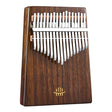
The 16-string lyre is often called the "Grand Piano" of the handheld harp world. While smaller lyres are charming, they are limited. Moving up to 16 strings (or 19/21) unlocks the ability to play true bass notes alongside your melody.
However, more strings can mean more confusion. The biggest challenge is navigating the three distinct zones: the Bass (strings 1-3), the Mid-Range (strings 4-10), and the Highs (strings 11-16). The sheet music below is designed to guide your hand through these zones effortlessly.
[[BANNER]]1. Decoding the 16-String Map
Before you start, ensure your tuning matches standard C Major notation. We use "Dot Notation" (Jianpu) here:
- Low Strings (G3 - B3): Written as 5̣ 6̣ 7̣ (Dot Below)
- Middle Strings (C4 - B4): Written as 1 2 3 4 5 6 7 (No Dot)
- High Strings (C5 - E5): Written as 1̇ 2̇ 3̇ 4̇ 5̇ (Dot Above)
2. Song 1: Always With Me (Spirited Away)
This is arguably the most famous song for the lyre. Its gentle, descending melody utilizes the full range of the 16-string instrument perfectly. Play this with a soft, "flesh pluck" for maximum nostalgia.
3. Song 2: My Heart Will Go On (Titanic)
This cinematic classic requires steady breath control. The long sustain of the lyre mimics the original penny whistle intro beautifully. Pay attention to the low "Ti" (7̣) note.
4. Song 3: Scarborough Fair
This old English folk song utilizes the "Dorian" mode feel. On a C-Major lyre, it starts on 2 (Re) or 6 (La). Here, we arrange it starting on the low 6 (La) to capture that haunting, deep resonance.
5. Song 4: Can't Help Falling in Love
This Elvis classic is perfect for practicing arpeggios (playing notes of a chord individually). It uses the full width of the lyre.
6. Song 5: The Sound of Silence
Simon & Garfunkel's masterpiece sounds incredibly eerie on a metal-string lyre. The metallic decay perfectly matches the lyric "Silence."
7. Song 6: Greensleeves
Traditionally, this song requires sharps (F#), but this arrangement is adapted for the standard diatonic C Major Lyre (A Minor mode). It works beautifully without retuning.
Conclusion
The transition from 7 to 16 strings is a major leap, but the reward is infinite. With the lower bass notes available in songs like "Always With Me" and "Scarborough Fair," you are no longer just playing a melody; you are creating an atmosphere. Take these tabs, play them slowly, and listen to the overtones colliding in the air.
