🎧 Listen: The sound difference between standard and bass range
Table of Contents
When shopping for a thumb piano, the most confusing moment comes when you see two instruments that look almost identical, but one has 17 keys and the other has 21 keys.
You might ask: "Is the 21-key version better just because it has more notes?" or "Is the 17-key version strictly for beginners?"
In this guide, we will strip away the technical jargon and compare these two popular sizes to help you decide if you really need those extra 4 notes.
The 17-Key Kalimba: Simple & Standard
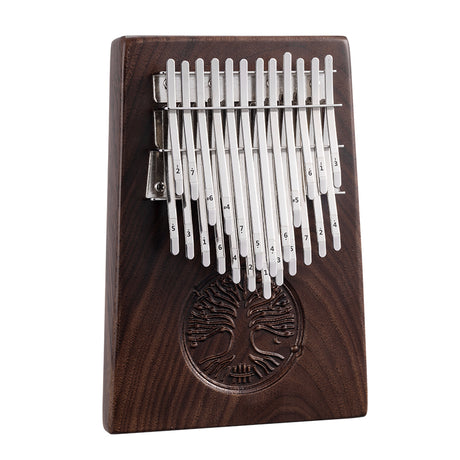
The 17-key model (tuned to C Major) is what we call the "Industry Standard." It is the Toyota Corolla of Kalimbas—reliable, popular, and gets the job done.
The Pros:
- Song Availability: 99% of online tutorials and tabs are written for 17 keys. You can instantly play songs from Ghibli, Disney, or Pop charts without needing to modify anything.
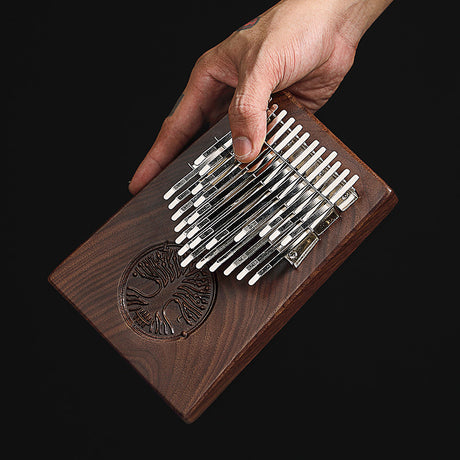
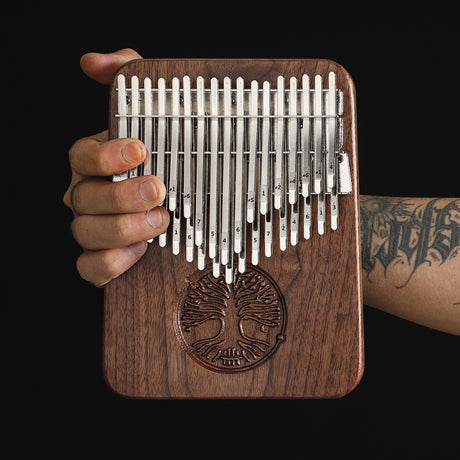
- Grip Comfort: The body is slightly narrower (around 13cm), making it perfect for holding with average-sized hands or for children.
- Price: It is usually more affordable, making it a low-risk investment for a new hobby.
The Cons: You are limited to roughly 2 octaves. Some emotional or complex songs require low bass notes that simply aren't there.
The 21-Key Kalimba: Richer & Deeper
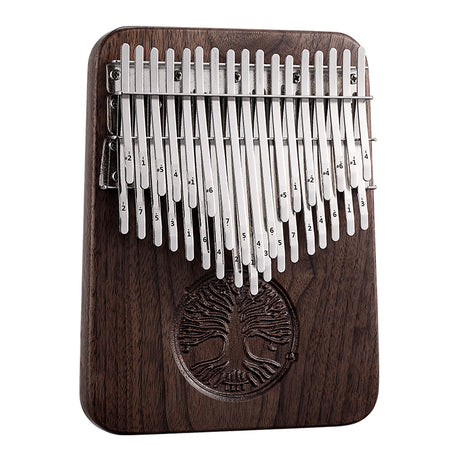
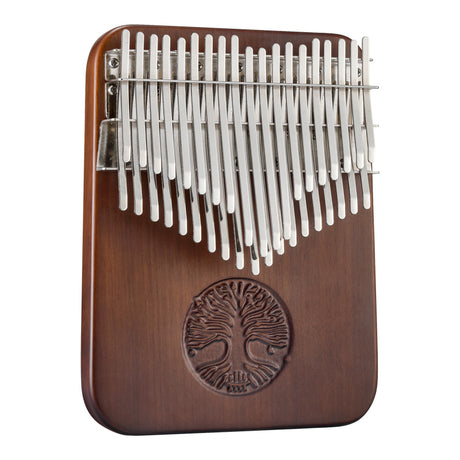
The 21-key model is essentially the "Pro" version. It takes the standard layout and adds 4 low bass notes in the very center.
The Pros:
- Deep Resonance: The extra bass keys add a rich, piano-like depth to your playing. It sounds fuller and more resonant.
- No Limits: You can play every single song written for a 17-key Kalimba, PLUS more advanced arrangements. It is "future-proof."
- Chord Possibilities: The wider range allows you to play melody and accompaniment (chords) simultaneously without them clashing.
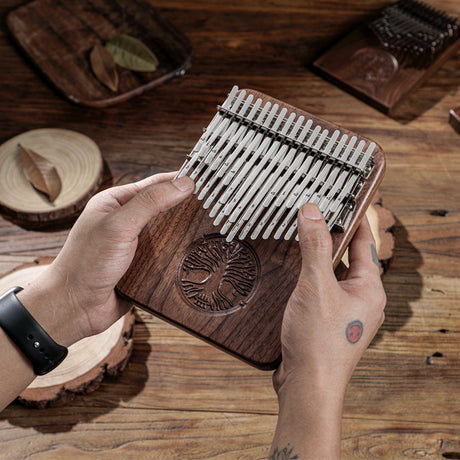
The Cons: The body is wider to fit the extra keys, which might feel a bit of a stretch for very small hands.
The Big Myth: "More Keys = More Difficult"
This is the most important thing you need to know: A 21-key Kalimba is NOT harder to play than a 17-key one.
Why? Because the layout is identical. The 17 keys on the outside are arranged exactly the same as the standard model. The 4 extra keys are tucked in the middle.
As a beginner, you can simply ignore the middle 4 keys and play it exactly like a 17-key instrument. When you are ready to level up, those extra notes are waiting for you.
Comparison Table: 17 vs 21 Keys
| Feature | 17-Key Kalimba | 21-Key Kalimba |
|---|---|---|
| Range | Standard (C4 - E6) | Extended Bass (F3 - E6) |
| Tab Compatibility | Excellent (Most songs) | Universal (All songs) |
| Difficulty | Beginner Friendly | Beginner Friendly (Same layout) |
| Best For | Casual players, Kids, Travel | Musicians, Long-term hobbyists |
Verdict: Which One Matches Your Style?
- Go for 17 Keys if: You want a compact, travel-friendly instrument, or you are buying a gift for a child. It is the classic choice that never fails.
- Go for 21 Keys if: You want a deeper, richer sound and want to ensure you don't "outgrow" your instrument in a few months. It is the better long-term value.
Conclusion & FAQ
At Hluru, we believe there is no "wrong" choice. Both instruments offer the soothing, rain-like sound that makes the Kalimba so special. Choose the one that fits your hands and your budget, and start playing.
Frequently Asked Questions
Q: Can I use 17-key sheet music on a 21-key Kalimba?
A: Yes, absolutely. You just play the corresponding keys. The extra 4 keys in the middle will just stay silent.
Q: Is the 21-key model much heavier?
A: It is slightly heavier due to the wider wood body and extra metal tines, but it is still very portable compared to most instruments.