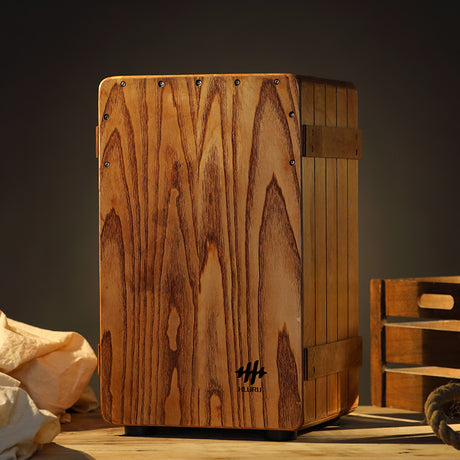
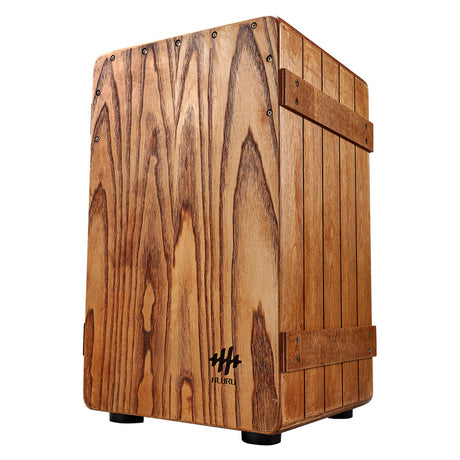
The cajón is loved for its warm bass, sharp slap tones, and expressive dynamics. However, those same qualities can become a problem when you live in an apartment, share walls, or practice late at night. Many players worry that even short practice sessions might disturb neighbors downstairs or next door.
The good news is that a cajón does not have to be a “neighbor-unfriendly” instrument. Unlike electronic drums or heavy amplification, cajón volume is largely mechanical and can be controlled with smart techniques, simple accessories, and basic room adjustments.
1. Why Cajóns Sound So Loud Indoors
Before reducing noise, it helps to understand why a cajón can feel especially loud in small rooms.
1.1 Strong Low Frequencies Travel Easily
The bass tone of a cajón comes from air movement inside the box. Low frequencies travel through walls, floors, and ceilings much more easily than high frequencies. This is why neighbors downstairs often hear “thumping” even when the sound doesn’t seem extreme to you.
1.2 Hard Surfaces Reflect Sound
Bare walls, tiled floors, and windows reflect sound instead of absorbing it. In many apartments, this reflection increases perceived volume and makes each hit sound sharper and louder.
1.3 Sitting Directly on the Cajón Amplifies Vibration
When you sit directly on the cajón, vibration transfers into your body and the floor. Wooden floors especially act like resonant panels, amplifying bass impact.
2. Adjusting Your Playing Technique (The Most Important Step)
The fastest and most effective way to reduce volume is to adjust how you play.
2.1 Play Softer — But Not Sloppier
Many players assume that playing quietly means losing control or tone. In reality, good technique allows you to maintain clarity at lower volumes.
Focus on:
- Relaxed wrists instead of arm force
- Controlled finger strokes
- Letting the tapa vibrate naturally
2.2 Use Finger-Based Slaps
Replacing palm-heavy slaps with finger slaps significantly reduces volume while preserving articulation. This is especially useful for high tones.
2.3 Avoid Over-Emphasizing Bass
Bass strokes are the main reason neighbors complain. During quiet practice:
- Reduce bass frequency usage
- Practice patterns with more mid/high strokes
- Work on rhythm accuracy instead of power
3. Simple Physical Noise Reduction Methods
3.1 Place a Soft Mat Under the Cajón
A thick yoga mat, rubber mat, or folded blanket under the cajón reduces vibration transfer into the floor. This alone can significantly reduce what neighbors hear.
3.2 Sit on a Cushion
Using a thin cushion:
- Reduces vibration transfer
- Slightly dampens internal resonance
- Improves comfort during long practice sessions
3.3 Lightly Dampen the Sound Hole
Placing a small cloth near (not tightly inside) the sound hole reduces air movement and lowers bass volume. Never completely block the sound hole, as this can damage the tone and internal pressure balance.
3.4 Internal Damping (Temporary Only)
For short practice sessions, placing a soft towel inside the cajón reduces resonance. Remove it afterward to avoid long-term moisture or pressure issues.
4. Optimizing the Practice Room
4.1 Add Soft Furnishings
Curtains, rugs, couches, and bookshelves absorb sound and reduce reflections. Even small changes can noticeably reduce perceived volume.
4.2 Avoid Corner Practice
Corners amplify bass frequencies. Practicing closer to the center of the room helps reduce low-frequency buildup.
4.3 Close Windows and Doors
Open windows allow low frequencies to travel far. Closing them significantly reduces sound leakage.
5. Practice Smarter, Not Louder
Not every practice session needs full volume.
- Use silent practice for rhythm drills
- Practice hand independence quietly
- Work on timing with a metronome at low volume
Many professionals deliberately practice softly to improve control and precision.
6. Timing Matters: Respect Quiet Hours
Most noise complaints are not about sound quality but timing. Practicing during daytime or early evening greatly reduces conflict.
If possible:
- Avoid late-night sessions
- Keep practice sessions short
- Communicate with neighbors when needed
7. Is the Cajón the Right Instrument for Your Living Situation?
Compared to many percussion instruments, the cajón is actually quite apartment-friendly. It produces less continuous sound than hand drums and can be easily dampened.
With proper technique and noise control, most players can practice comfortably without disturbing others.
Quiet practice doesn’t mean bad practice.
With thoughtful adjustments, you can keep improving while staying on good terms with your neighbors.