🎧 Listen: A random improvisation (Notice how it harmonizes?)
Table of Contents
You are scrolling through Instagram or TikTok, and you see someone playing a Steel Tongue Drum. It sounds Zen, ethereal, and complicated. A thought crosses your mind: "That's beautiful, but I have zero rhythm. I'd probably sound terrible."
Here is the honest truth: The Steel Tongue Drum is arguably the easiest musical instrument in the world.
It was specifically designed for non-musicians. Unlike a violin (which squeaks) or a guitar (which hurts your fingers), the Tongue Drum rewards you with a perfect, resonant sound from the very first strike. Let's explore why.
The Secret: Why You Can't Play a Wrong Note
Most instruments, like the piano, have 88 keys. If you hit the wrong one, it sounds dissonant and "bad."
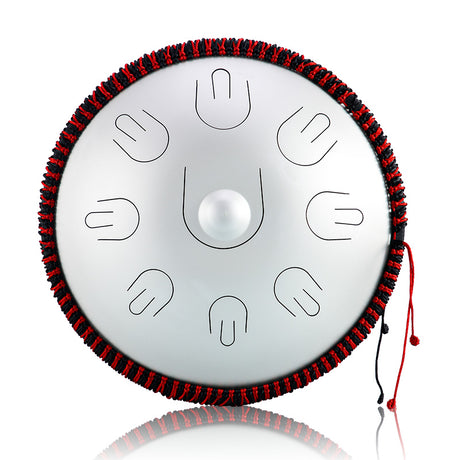
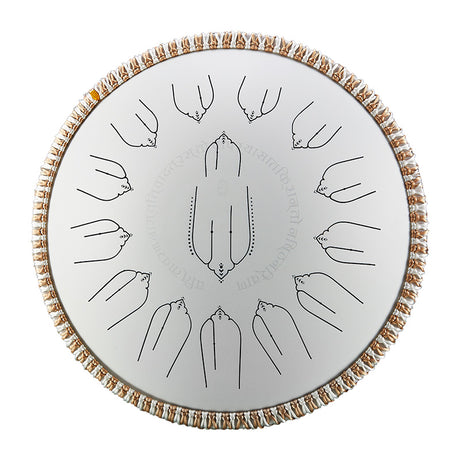
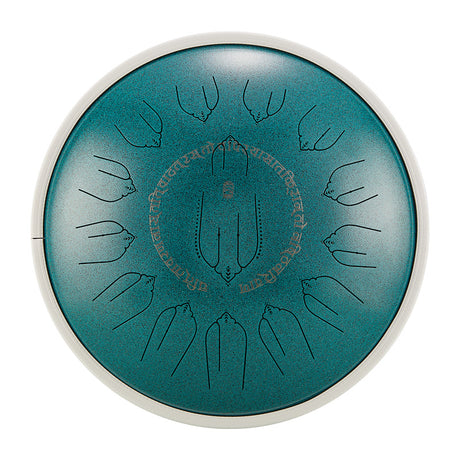
The Tongue Drum is different. Most Hluru drums are tuned to a Pentatonic Scale. Without getting too technical, this means every note harmonizes with every other note.
- You don't need to memorize chords.
- You don't need to read sheet music.
- You can hit the tongues in random order, and it will still sound like a composed melody.
It is the "cheat code" of musical instruments. You are not "learning" to play; you are "discovering" melodies.
Mallets vs. Hands: The Two Ways to Play
Beginners often ask: "Is it hard to make a sound?" It depends on the tool you use.
1. Playing with Mallets (Easiest)
Every Hluru drum comes with rubber mallets. This is Zero Difficulty.
Because the rubber head bounces off the steel, you get a pure, loud, and crystal-clear bell tone instantly. We recommend all beginners start here.
2. Playing with Hands (Intermediate)
Playing with your fingers requires a quick "tap-and-release" motion, like testing a hot iron. This takes a few days of practice to get a loud sound, but it offers a warmer, more intimate connection with the instrument.
Tongue Drum vs. Piano/Guitar (Comparison)
Still on the fence? Let's compare the learning curve.
| Instrument | Time to First "Good" Song | Music Theory Needed? | Physical Pain? |
|---|---|---|---|
| Tongue Drum | 5 Minutes | No | None |
| Guitar | 2-3 Months | Yes (Chords) | Yes (Sore fingertips) |
| Piano | 1-2 Months | Yes (Scales) | No |
| Violin | 6 Months+ | Yes (Pitch) | Yes (Neck/Arm) |
Beyond Music: The Stress Relief Factor
Because it is so easy to play, the Tongue Drum is often used for active meditation.
When you play a difficult instrument, your brain is stressed: "Am I doing this right? Is my finger in the right spot?"
When you play a Tongue Drum, your brain relaxes. Since you can't make a mistake, you enter a "Flow State." Many of our customers are not musicians—they are busy professionals, parents, or yoga practitioners who use the drum to wind down after a stressful day. It is sound therapy in a box.
How Long Does It Take to Learn?
- Day 1: You can play random beautiful melodies using mallets.
- Week 1: You can play simple songs (like "Twinkle Twinkle Little Star") by following number tabs.
- Month 1: You start playing with your hands and creating your own rhythms.
Conclusion & FAQ
So, is a Tongue Drum hard to play? No. It is likely the most rewarding and accessible instrument you will ever touch.
It invites you to stop thinking and start feeling. Ready to find your rhythm?
Frequently Asked Questions
Q: Do I need to tune it myself?
A: No! Unlike a guitar, Tongue Drums come permanently tuned. You never have to adjust them.
Q: Is it loud? Will it annoy neighbors?
A: It is much quieter than a drum kit. It has a gentle, ambient volume (about the level of a normal conversation). It is very apartment-friendly.

![Buy One Get One Free - HLURU Tongue Drum Flagship Duo - Microalloyed Steel 14" 15 Note Flagship and 6" 8 Note High Pitch Extension Tongue Drum [Engravable]](http://www.hluru.net/cdn/shop/files/4314d7859af8173cfeabd2ec82606eec.png?v=1761902169&width=460)
![Buy One Get One Free - HLURU Tongue Drum Flagship Duo - Microalloyed Steel 14" 15 Note Flagship and 6" 8 Note High Pitch Extension Tongue Drum [Engravable]](http://www.hluru.net/cdn/shop/files/d18931792f42db6cad0425bb408c8fbd.png?v=1761902169&width=460)
![Buy One Get One Free - HLURU Tongue Drum Flagship Duo - Microalloyed Steel 14" 15 Note Flagship and 6" 8 Note High Pitch Extension Tongue Drum [Engravable]](http://www.hluru.net/cdn/shop/files/0ee52f9e59e0bd412f602e1aa459ff5f_d7e276e6-d00c-4b17-9b06-0013facd6adf.png?v=1761902169&width=460)
![Buy One Get One Free - HLURU Tongue Drum Flagship Duo - Microalloyed Steel 14" 15 Note Flagship and 6" 8 Note High Pitch Extension Tongue Drum [Engravable]](http://www.hluru.net/cdn/shop/files/e5142852154df54a0f8e743222a7bf5f_da0b025d-89c7-4aab-bcf2-5855a5ad8550.png?v=1761902169&width=460)
![Buy One Get One Free - HLURU Tongue Drum Flagship Duo - Microalloyed Steel 14" 15 Note Flagship and 6" 8 Note High Pitch Extension Tongue Drum [Engravable]](http://www.hluru.net/cdn/shop/files/005ae8333fa1842990565ae33f7ba822.png?v=1761902169&width=460)
![Buy One Get One Free - HLURU Tongue Drum Flagship Duo - Microalloyed Steel 14" 15 Note Flagship and 6" 8 Note High Pitch Extension Tongue Drum [Engravable]](http://www.hluru.net/cdn/shop/files/c340b9ba91df466c93fe7ac81a7586fe_a7b555a3-735a-4978-bca4-9544c28b6bcd.png?v=1761902169&width=460)
![Buy One Get One Free - HLURU Tongue Drum Flagship Duo - Microalloyed Steel 14" 15 Note Flagship and 6" 8 Note High Pitch Extension Tongue Drum [Engravable]](http://www.hluru.net/cdn/shop/files/eb7bd7f5af6ed635582c7d394eeff8bd_9469ba15-7352-4102-800c-11dc61e392d0.png?v=1761982655&width=460)
![Buy One Get One Free - HLURU Tongue Drum Flagship Duo - Microalloyed Steel 14" 15 Note Flagship and 6" 8 Note High Pitch Extension Tongue Drum [Engravable]](http://www.hluru.net/cdn/shop/files/654d7d7a6a5a883c65121abfe72ac53a_685b3d39-9c6e-40ed-8f2f-ca46a4cd519f.png?v=1761902169&width=460)