Table of Contents
Cajon Wood Guide: How to Choose the Perfect Sound for Your Style
To the untrained eye, a Cajon might look like a simple wooden crate. But as soon as you sit down and strike the front plate, you realize it is a sophisticated percussion instrument with a soul of its own. The "heartbeat" of the Cajon comes from one primary factor: the wood.
If you are shopping for your first Cajon on Hluru, you might be asking: "Does the wood type really change the sound?" The answer is a resounding yes. Different densities, grains, and flexibility affect the resonance, the "slap" sound, and the bass depth. Instead of boring you with manufacturing specs, this guide will help you match the wood type to your personal musical style.
The All-Rounder: Why Beginners Love Baltic Birch
If you visit a professional music studio or a campfire jam session, chances are you will see a Cajon made of Baltic Birch Plywood. It is often called the "Gold Standard" not because it is the most expensive, but because it is the most reliable.
The Sound Profile:
Baltic Birch offers a beautiful EQ balance. You get a punchy, well-defined bass (low end) and a crisp, cracking slap (high end). It doesn't lean too heavily into one frequency, giving you a clear, modern sound that fits almost any genre.
Why choose it?
- Durability: The multi-ply construction makes it incredibly stable. It resists warping from temperature changes, making it perfect for travel.
- Consistency: Whether you play soft jazz or loud pop music, Birch responds accurately to your touch.
- Value: It offers professional sound quality without the premium price tag of exotic solid woods.
Verdict: Perfect for beginners and gigging musicians who need one drum to do it all.
Tone Character: Exploring Solid Hardwoods
While Birch is the safe choice, solid hardwoods are the "flavor" choices. When builders use solid woods for the front plate (or the body), they are sculpting a very specific personality for the instrument. Here is how the most popular woods affect the tone:
1. Maple: The Bright Cutter
Maple is dense and hard. In the world of drums, Maple is famous for its projection. A Maple Cajon will often have a very quick response with a bright, "shimmering" high end. The bass is tight and focused rather than booming.
Best for: Acoustic guitar accompaniments where the percussion needs to "cut through" the mix clearly.
2. Mahogany: The Warm Soul
If you love deep, earthy tones, Mahogany is your wood. It naturally boosts the low-mid frequencies. A Mahogany Cajon won't sound as sharp or aggressive as Maple; instead, it produces a warm, rounded "thump" that fills the room.
Best for: Bossa Nova, Folk, soft Rock, and studio recordings where you want a rich, supportive bass sound.
3. Oak: The Volume Monster
Oak is synonymous with strength. It is a very hard wood with a coarse grain. Sonically, this translates to volume and power. An Oak Cajon can take a beating and projects sound forcefully. However, because the wood is so rigid, it might feel slightly less sensitive to very light finger taps compared to softer woods.
Best for: Live street performances (busking), rock bands, or drummers with a heavy hand who need to be heard loudly.
4. Beech: The Studio Specialist
Beech sits somewhere between Maple and Mahogany. It offers excellent clarity and a very wide dynamic range. It is known for being articulate—meaning every ghost note and subtle finger roll is heard clearly.
Best for: Recording artists and players who use complex, intricate hand techniques.
The Tapa: The Face of Your Sound
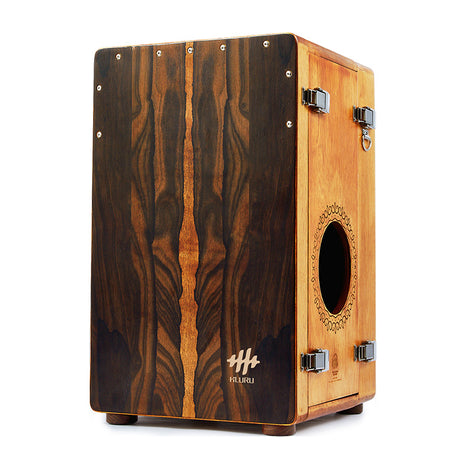
When selecting a Cajon, pay special attention to the Tapa (the front faceplate). This is the only part of the drum you actually hit. While the body of the drum acts as the speaker cabinet, the Tapa acts as the speaker cone.
- Thinner Tapa: generally more sensitive, easier to produce "snare" sounds with light touches.
- Thicker/Denser Tapa: requires more force but offers more projection and volume.
Pro Tip: Many modern Cajons combine a Birch body (for structural stability) with an exotic hardwood Tapa (for tonal color). This gives you the best of both worlds.
Quick Guide: Which Wood Fits Your Vibe?
Still not sure? Find your persona below to pick the right instrument:
- The First-Timer: Go for Baltic Birch. It’s forgiving, durable, and sounds great out of the box.
- The Singer-Songwriter: Look for Mahogany or Walnut faces. The warm bass won't overpower your vocals.
- The Busker (Street Performer): Choose Oak or Ash. You need volume to compete with traffic noise.
- The Technical Player: Try Maple or Beech for that crisp, articulate response to fast finger work.
Conclusion
Choosing the best wood for a Cajon isn't about finding the "superior" species—it's about finding the voice that matches your music. Whether you prefer the reliable punch of Birch or the warm embrace of Mahogany, your hands will eventually shape the sound.
At Hluru, we craft our instruments to highlight the natural acoustic properties of these materials. Browse our collection and listen to the difference.
Frequently Asked Questions
Q: Can I use a Cajon for rock music?
A: Absolutely. Birch and Oak cajons provide a kick-and-snare sound that mimics a drum kit perfectly for acoustic rock sessions.
Q: Does the finish (paint) affect the sound?
A: Generally, a matte or thin oil finish allows the wood to vibrate more freely than a thick, glossy lacquer, resulting in a more open and natural tone.