
📖 Table of Contents
Key Tuning Principles
- Physics of Tines: Longer tines produce deeper bass notes; shorter tines produce higher treble notes.
- Tap Down (Lengthen): To lower the pitch (fix a Sharp note).
- Tap Up (Shorten): To raise the pitch (fix a Flat note).
The kalimba, also known as the thumb piano, produces sound by the vibration of metal tines. These tines are fixed on the kalimba body, with varying lengths that produce different tones. Longer tines, typically at the center, create deeper bass notes, while shorter tines on the sides produce higher-pitched sounds. Proper tuning is essential for achieving the best musical performance.
This comprehensive guide explains each step in detail, including common challenges and pro tips for accurate tuning.
1. What You’ll Need
Before starting, gather these essential tools to ensure precision and make the tuning process smooth and efficient:
- Kalimba: The instrument itself (17 or 21 keys).
- Tuning App: A smartphone app that detects sound frequencies and notes (e.g., Pano Tuner, Tunable).
- Tuning Hammer: A small metal tool specifically designed for tapping kalimba tines.
- Kalimba Tuning Chart: A reference guide for the correct notes and frequencies.

2. Step 1 & 2: Measuring and Comparing
First, open the tuning app on your phone and place your kalimba close to the phone’s microphone.
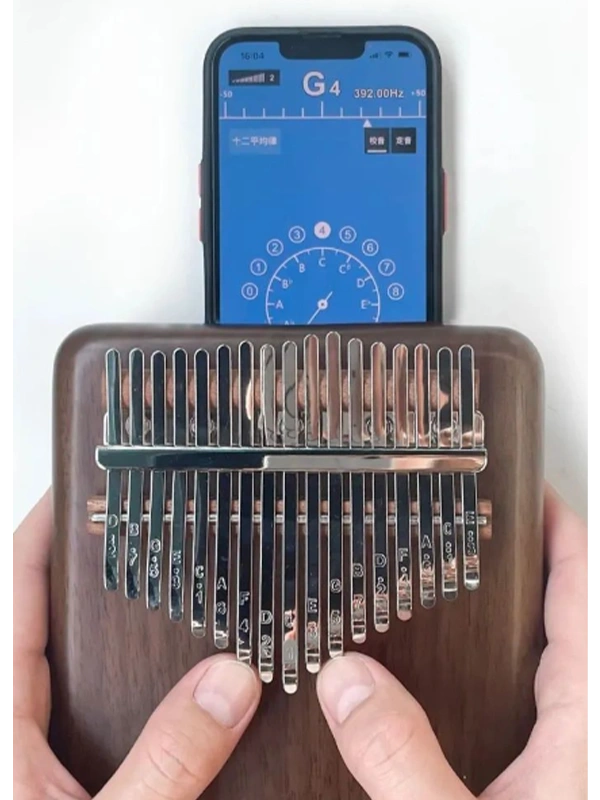
Begin plucking tines with your thumb. Start from the center tine and work symmetrically toward the sides. This order is important for consistency and organization.
Ensure the app captures each tine’s sound accurately by holding the kalimba steady to minimize background noise.
Comparing to the Chart
Check the tuning app’s display to identify the note being played and compare it to your chart.
Pro Tip: If the app shows unstable readings (notes fluctuate), refer to the frequency value instead. For instance, a standard A4 note should display a frequency of 440 Hz.
3. Step 3: Adjusting with the Hammer
This is the most critical step. Once you have identified the discrepancies, use your tuning hammer to physically move the tines.
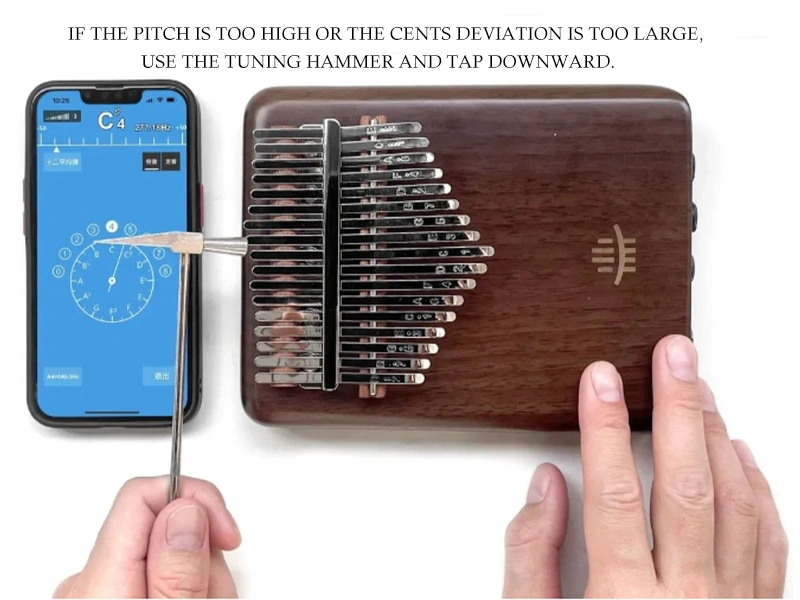
Use the tuning hammer to gently tap the top of the tine downward. This increases the tine’s vibrating length, lowering the pitch.
If the note is too LOW (Flat b)Tap the bottom of the tine upward. This shortens the vibrating section, raising the pitch.
Quick Check for Beginners: The kalimba’s notes follow the C major scale (C, D, E, F, G, A, B). If the app shows a note earlier in this sequence than expected, the tone is sharp. If later, the tone is flat.
Recommended Products

24 مفتاحًا بطبقتين كاليمبا للمستوى المتقدم | نطاق واسع النغمة Hluru شجرة الحياة
سمات سهل اللعب: هذه الكاليمبا الكروماتيكية المصنوعة من الجوز الأسود بـ 24 مفتاحًا، والتي تشمل مقامات السلم الكبير للنوتة B والنوتة C، تلبي احتياجات كل من المبتدئين واللاعبين المحترفين. سواء...

5 مفاتيح صغيرة كاليمبا للموسيقى العلاجية وتخفيف التوتر | خشب الكرز نغمة ناعمة Hluru
سمات حرفية متميزة جزء من سلسلة موسم الكمال، تتميز هذه الكاليمبا المصغرة بجسم مضغوط من خشب الكرز، مما يجمع بين المتانة الطبيعية والرنين اللطيف. يعكس الطلاء الناعم والصديق للأطفال ودقة...

أكاسيا كاليمبا لليوغا والتأمل 17/21 مفتاح | نغمة احترافية وفتحة صوت سفلية Hluru
متصفحك لا يدعم الإطارات المضمنة الميزات سهل اللعب: تعلم أغنية في غضون 5 دقائق فقط. بعد أن تقوم بوضع طلبك، ستتلقى تعليمات لعب مفصلة ونصائح تساعدك على إتقان الأساسيات بسرعة....

Huashu 17/21 مفتاح أكريليك دو كبير كاليمبا للاسترخاء - قطة's Paw
متصفحك لا يدعم الإطارات المضمنة. الميزات سهل اللعب: تعلم عزف أغنية في غضون 5 دقائق فقط. بعد تقديم طلبك، ستتلقى دليلاً سهلاً لمتابعته مع نصائح تمكنك من عزف أغنية خلال...
4. Step 4: Troubleshooting Common Issues
Even with the right technique, you might face some acoustic challenges. Here is how to solve them:
- Sympathetic Vibrations: Nearby tines may vibrate when plucking a note, causing incorrect readings. To avoid this, gently press adjacent tines with your fingers to mute them while tuning the target note.
- App Sensitivity: Some tuning apps struggle in noisy environments. Always tune in a quiet room.
- Large Adjustments: If a tine is significantly off, make gradual adjustments (small taps) to avoid over-correction.
5. Step 5: Fine-Tuning & Verification
After adjusting each tine, go through the entire set again. Pluck each note and compare it to the tuning chart. Confirm that all notes match both in name and frequency.
Additional Maintenance Tips:
1. Check Regularly: Over time, tines may shift slightly due to play or storage conditions.
2. Don't Over-Tighten: If your kalimba has adjustable screws, ensure they are secure but not stripped.
Conclusion
Tuning a kalimba might seem challenging at first, but with practice and the right tools, it becomes a straightforward process. By following these steps, you can ensure your kalimba produces the beautiful, resonant sounds it’s meant to. Make tuning a part of your regular kalimba routine, and you’ll enjoy an instrument that always performs at its best.