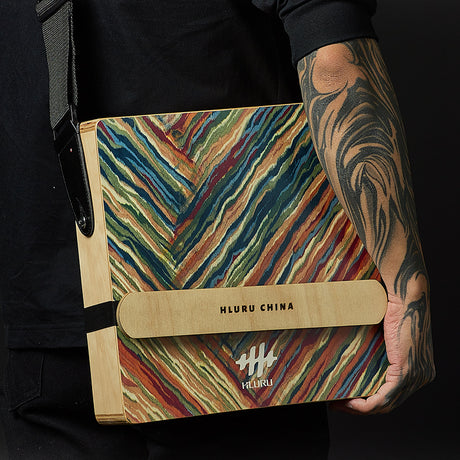
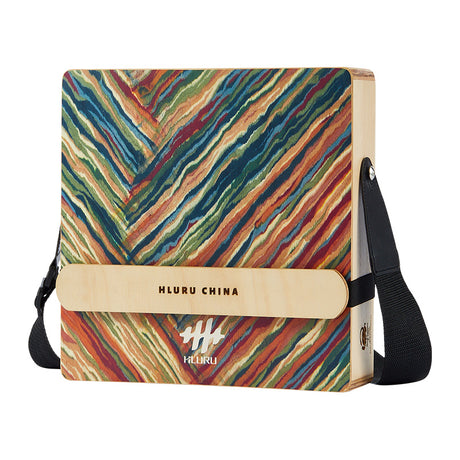
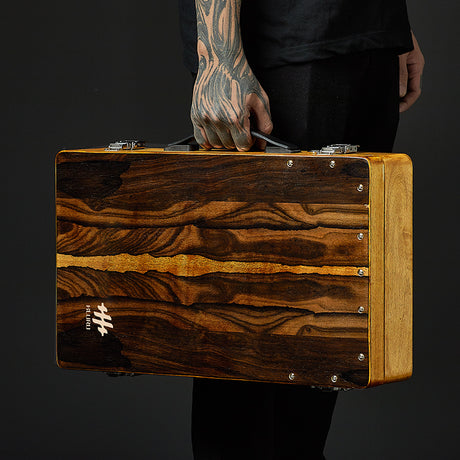
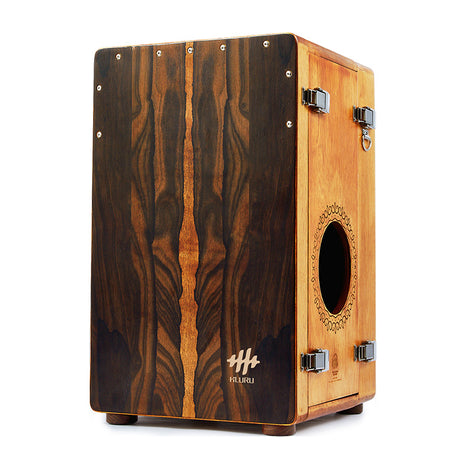
🎧 Listen: How a simple beat sounds on a Hluru Cajon
Table of Contents
You have seen them at beach bonfires, acoustic street performances, and church bands: musicians sitting on a wooden box, creating a beat that sounds like a full drum kit. You watch them and think, "That looks cool, but could I actually play it?"
The short answer is: YES.
The Cajon (pronounced ka-hon) is widely considered one of the most accessible instruments in the world. Unlike the violin or piano which require years of practice to sound "good," the Cajon rewards you with a great beat in your very first session.
Why It Is The Easiest Instrument to Start
Why do we recommend the Cajon to people who claim they have "no musical talent"?
- No Complex Theory: You don't need to read sheet music or understand chords. If you can tap your foot to a song on the radio, you can play the Cajon.
- Natural Ergonomics: You simply sit on it. There are no heavy straps, no awkward holding positions, and no drumsticks to drop. Your hands are the only tools you need.
- Immediate Feedback: Hit the middle, it goes "Boom." Hit the edge, it goes "Crack." It is intuitive logic that your brain understands instantly.
The 3 Sounds You Need (Bass, Tone, Tap)
To play 90% of your favorite pop, rock, or folk songs, you only need to master three spots on the drum.
1. The Bass (The "Kick Drum")
How to do it: Strike the middle-upper part of the faceplate with your full palm (fingers relaxed).
The Sound: A deep, resonant "Thud" that shakes the floor. This provides the heartbeat of your rhythm.
2. The Tone (The "Snare Drum")
How to do it: Strike the top corners or the very top edge with the length of your fingers.
The Sound: A sharp, crisp "Crack" or "Pop." Inside the Cajon, there are snare wires (like guitar strings) that buzz when you hit this spot.
3. The Tap (The "Ghost Notes")
How to do it: Lightly tap the face with your fingertips between the heavy beats.
The Sound: A soft whisper texture that fills in the empty space and makes you sound like a pro.
Common Myths: Do My Hands Need to Be Strong?
Myth: "I will hurt my hands hitting a wooden box."
Reality: Not if you do it right! Playing the Cajon is about bounce, not brute force.
Beginners often make the mistake of hitting too hard. The faceplate of a Hluru Cajon is thin and flexible (usually Birch or Ash wood). It is designed to resonate with a light, snappy touch. If your hands hurt, you are likely hitting too hard or too stiffly. Relax your wrists, and let the wood do the work.
Who Should Buy a Cajon?
We see three main types of people falling in love with this instrument:
- The "Desk Tapper": Are you the person who is always drumming your fingers on the desk or steering wheel? The Cajon is your perfect outlet.
- The Guitarist's Best Friend: Every acoustic guitarist needs a rhythm section. If your partner or friend plays guitar, a Cajon is the best gift to turn their solo act into a band.
- Families & Kids: It is sturdy (you sit on it, after all!), hard to break, and a great way to get kids off screens and into rhythm.
How to Choose Your First Cajon
Not all boxes are created equal. When browsing our collection, look for:
- Adjustable Snares: Some models allow you to tighten or loosen the internal strings to change the sound from "buzzy" to "clean."
- Rubber Feet: Essential for stability and to protect your floors.
- Wood Type: Birch is great for a punchy, modern sound. Ebony or Walnut offers a warmer, deeper look and tone.
Conclusion & FAQ
The Cajon is the "gateway drug" to the world of percussion. It is affordable, portable, and incredibly satisfying to play. You don't need lessons to start enjoying it—just a sense of adventure.
Ready to find your beat? Check out the recommended models below.
Frequently Asked Questions
Q: Is it okay for kids?
A: Yes! We have specifically designed "Teenager/Kids Series" Cajons (like the Hluru 42CN) which are slightly smaller, allowing shorter arms to reach the bass zone comfortably.
Q: Do I need to tune it?
A: Generally, no. Most Cajons come pre-tuned. Some advanced models allow you to adjust the snare tension with a hex key (included), but it's not required for beginners.