

Una guía equilibrada y basada en la experiencia para nuevos jugadores. Analizamos el tono, la curva de aprendizaje, el mantenimiento, consideraciones para niños versus adultos, grabación y uso en vivo — además de un modelo recomendado para principiantes.
Una de las primeras decisiones que enfrenta un nuevo comprador de cajón es si adquirir un instrumento con sistema de cuerdas (a veces llamados "snares", "cuerdas" o "hilos vibrantes") o una caja puramente acústica, sin cuerdas. Ambos tipos son comunes; ambos son válidos; ambos tienen ventajas y desventajas. Este artículo explica esas diferencias en términos prácticos para que puedas tomar una decisión confiada e informada que se ajuste a tus objetivos como principiante.
¿Qué es una cuerda en un cajón?
Una "cuerda" en un cajón generalmente se refiere a cuerdas, cables o bobinas montadas justo detrás de la tapa (placa frontal). Cuando se golpea la tapa—especialmente cerca del borde superior—las cuerdas vibran contra la madera y producen un zumbido breve o "chisporroteo" similar a un tambor de caja. Los tipos varían: cuerdas de guitarra, juegos de cables metálicos, bancadas de cuerdas ajustables o bobinas pegadas de forma sencilla. Algunas son fijas; otras permiten ajustar la tensión o retirarlas.
Tono y carácter musical — Con cuerda vs Sin cuerda
Cajones con cuerda
- **Golpes más brillantes y presencia inmediata.** La cuerda añade energía en altas frecuencias, haciendo que los golpes resalten más en mezclas y arreglos en banda. - **Sostenido más corto y nítido** en golpes — el zumbido atenúa algunas resonancias largas, produciendo una articulación rítmica ajustada útil en pop, folk-pop, Latin y conjuntos. - **Respuesta más "similar a un tambor"** — si quieres que tu cajón actúe como una batería compacta (contratiempo claro / énfasis en la cuerda), las cuerdas ayudan.
Cajones sin cuerda
- **Tono más cálido, más madera.** Sin el zumbido de las cuerdas, el instrumento enfatiza la resonancia natural media-baja de la caja. - **Sonido más limpio y "acústico"** adecuado para intérpretes en solitario, cruce clásico y música meditativa o ambiental. - **Dinámica más sencilla** — dado que no hay chisporroteo adicional, las notas fantasmas sutiles y las nuances con los dedos son más audibles de otra manera (menos distracción en altas frecuencias).
Curva de aprendizaje y técnica — ¿Cuál ayuda más a los principiantes?
Ambos tipos enseñan bien el ritmo y la técnica con las manos, pero enfatizan habilidades ligeramente diferentes.
Cajones con caja con trampa para principiantes
- **Pros:** Retroalimentación clara al golpear—recompensa instantánea, más fácil de escuchar las palmadas, útil para desarrollar el tiempo y el groove.
- **Contras:** La trampa puede enmascarar problemas sutiles de técnica (puedes obtener un "buen sonido" golpeando más fuerte en lugar de mejorar el toque).
Cajones sin trampa para principiantes
- **Pros:** Obliga a concentrarse en la producción de tono mediante la colocación y el toque; excelente para desarrollar sensibilidad y control.
- **Contras:** Las palmadas son menos evidentes en habitaciones ruidosas—puede parecer menos "recompensante" al principio si te gustan las palmadas inmediatas y contundentes.
Si estás empezando y quieres resultados inmediatos en una banda o clase grupal, un cajón con trampa puede ser motivador. Si tu profesor enfatiza el control técnico y el matiz acústico, un cajón sin trampa es una excelente plataforma de aprendizaje.
Contextos prácticos — ¿Cuál se adapta a tu caso de uso?
Práctica en casa y entornos acústicos pequeños
Los cajones sin trampa suelen sentirse más cálidos y menos intrusivos en entornos domésticos. Para vivir en apartamento o practicar tarde en la noche, la ausencia de zumbido de la trampa puede ser menos fatigante para los oídos y vecinos.
Aulas y clases grupales
Los cajones con trampa ofrecen una articulación más clara en entornos grupales; se necesita menos esfuerzo de micrófono para escuchar quién está tocando. Para conjuntos en aula o campamentos de ritmo, las trampas facilitan la instrucción y la cohesión del grupo.
Escenario y contextos amplificados
En el escenario, las trampas suelen ser preferidas porque ayudan a que las palmadas atraviesen guitarras y voces; requieren menos ecualización agresiva para ser escuchadas. Muchos intérpretes usan trampas ajustables para cambiar entre tonos más limpios de estudio y tonos más presentes en vivo.
Mantenimiento y durabilidad — Qué esperar
Agregar un sistema de trampa introduce una capa adicional de mantenimiento: las cuerdas pueden estirarse, corroerse o necesitar reemplazo; los mecanismos ajustables pueden aflojarse o requerir ajustes. Los cajones sin trampa son mecánicamente más simples y generalmente solo necesitan revisiones ocasionales de tornillos y cuidado general.
- Las cuerdas de trampa (especialmente de metal) se pueden reemplazar a bajo costo; guarda un juego de repuesto en tu bolso de conciertos.
- Verifica los puntos de contacto donde las cuerdas tocan la tapa interior—puentes protectores pequeños reducen el desgaste.
- Si la trampa es ajustable, evita apretarla demasiado para prevenir daños en la tapa o reducción en la respuesta de graves.
Grabación y micrófono: Cómo la presencia de la trampa cambia tu técnica
En un estudio, un cajón con trampa puede ahorrar tiempo—las palmadas son inherentemente más brillantes y fáciles de captar. Pero quizás quieras más control: ajusta la tensión de la trampa o emplea micrófonos dinámicos para reducir el brillo.
- Con trampa: Coloca un micrófono cerca del borde superior para las palmadas y otro cerca del agujero de sonido (o en la parte baja trasera) para los graves. Si las trampas son demasiado duras, atenúa entre 4 y 8 kHz con un recorte suave.
- Sin caja: Utiliza un micrófono de ambiente o un segundo condensador ambiental para capturar el carácter completo de medios bajos; a veces, la mezcla de micrófonos de ambiente y cercanos da el resultado más natural.
Modelo recomendado para principiantes — Hibiscus (Serie Adolescente)
Cajón — Hibiscus (42CN Pájaro Vermilion) — Adolescente / Juvenil Básico
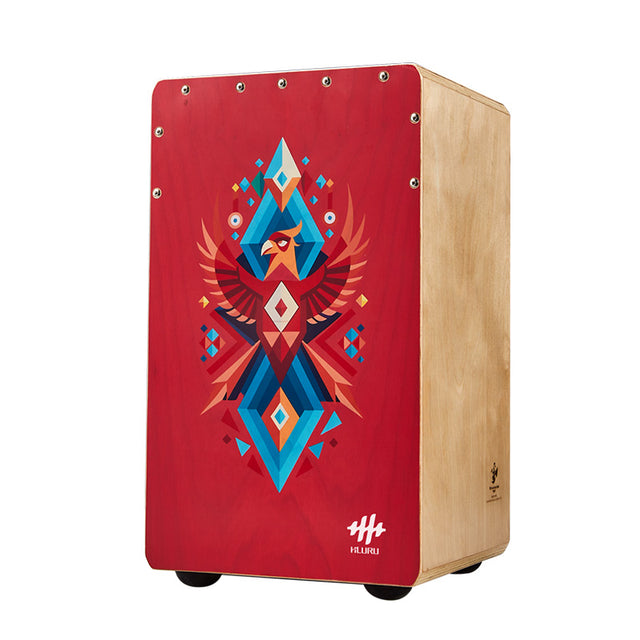
Precio: 209,99 USD
Material: Panel: Fresno | Cuerpo: Abedul ruso
Tamaño del paquete: 34 × 33 × 54 cm
Peso del paquete: 4.8 kg
Caja de resonancia: Caja de guitarra TRE06
Este modelo Hibiscus está diseñado para jóvenes y principiantes que desean un cajón confiable y musical con un carácter de caja de buen gusto. El panel de fresno proporciona golpes brillantes, mientras que el cuerpo de abedul ruso mantiene el rango bajo enfocado y claro. La caja estilo guitarra TRE06 ofrece un chisporroteo agradable y controlado — lo suficientemente brillante para bandas, pero no fatigante para práctica en casa.
Lista de verificación para decidir — Cómo elegir ahora mismo
- ¿Dónde tocarás más? Hogar/estudio → considera sin caja o con cajas ajustables. Banda/escenario → útil con caja.
- ¿Necesitas un "corte" inmediato? Sí → las cajas ayudan. No → sin caja está bien.
- ¿Estás comprando para un niño? Prefiere cajas pequeñas, ligeras, posiblemente con cajas suaves estilo TRE06 o sin cajas para reducir ruido y complejidad.
- ¿Tolerancia de mantenimiento? Bajo → sin caja o con cajas simples fijas. Cómodo con algo de mantenimiento → las cajas ajustables ofrecen flexibilidad.
- ¿Necesidades de grabación? Ambos funcionan; las cajas ahorran tiempo para golpes cercanos con micrófono, las selladas/sin caja se benefician de mezclas con micrófono de sala.
Pensamientos finales
No hay una respuesta única "mejor" para todos los principiantes. Si te motivan golpes inmediatos y contundentes y planeas tocar en bandas o en entornos amplificados, una cajón con caja te dará la presencia y articulación que deseas. Si valoras calidez acústica, tono de madera puro y sencillez de bajo mantenimiento — o si te enfocas en desarrollar sensibilidad y sutileza — un cajón sin caja es una plataforma excelente.
Prácticamente, muchos profesores y músicos finalmente aprecian tener ambas opciones: un cajón sin caja para trabajo delicado en estudio o práctica, y un modelo con caja para tocar en vivo. Como principiante, elige tu primera opción según dónde tocarás con más frecuencia, y recuerda que muchos cajones pueden aceptar kits de caja para modificar más adelante si decides cambiar.