Table of Contents
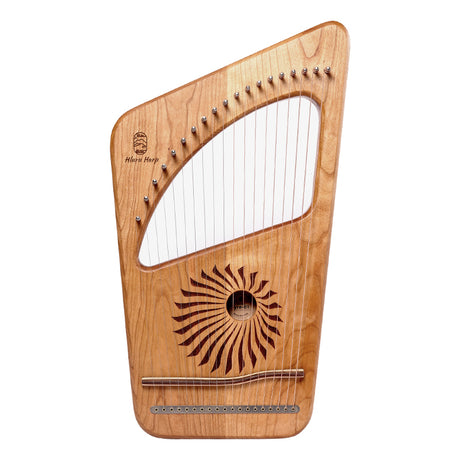
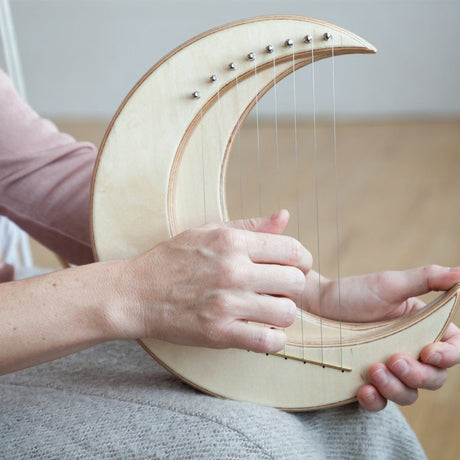
You just received your beautiful new Lyre Harp. You pluck a string, expecting an angelic sound, but instead, it sounds... discordant.
Tuning a Lyre for the first time can be frustrating. Unlike a guitar which has gears to help you tune easily, a Lyre uses friction pegs. This means it requires a delicate touch.
But don't worry! This guide will turn you from a frustrated beginner into a tuning pro in 5 minutes.
The Golden Rule: Tiny Movements
If you remember only one thing from this article, let it be this:
Turn the wrench only 1 or 2 millimeters at a time.
A Lyre is extremely sensitive. A quarter-turn (like you would do on a guitar) can snap a Lyre string instantly or raise the pitch by 3 whole notes. Think of it like cracking a safe—move the wrench almost imperceptibly.
Tools You Need (Free Apps vs. Real Tuners)
You don't need to buy expensive equipment. Here is your toolkit:
- The Tuning Wrench: This came in the box with your Hluru Lyre.
- A Digital Tuner: Ideally a clip-on tuner (vibration based).
- Or A Free App: If you don't have a clip-on tuner, download free apps like InsTuner (iOS) or gStrings (Android). Set them to "Chromatic" mode.
Step-by-Step Tuning Guide
- Know Your Notes: Most 16-string Lyres start from G3. Check the manual or the letter stamped on the wood near the string.
-
Pluck and Listen: Pluck the string. Look at your tuner.
- If the needle is to the Left (Flat/Low): You need to tighten the string (Turn Clockwise).
- If the needle is to the Right (Sharp/High): You need to loosen the string (Turn Counter-Clockwise).
- The "Tune Up" Method: Always tune up to the note. If a string is too sharp, loosen it until it is too flat, and then slowly tighten it up to the correct pitch. This helps the peg hold its position better.
Why Does My Lyre Keep Going Out of Tune?
This is the #1 complaint from new owners, but it is NOT a defect.
New nylon or metal strings are elastic. When you tighten them, they naturally want to relax back to their original length. It takes about 3 to 5 days of consistent tuning for the strings to "settle" and hold their pitch.
The Fix: For the first week, tune your Lyre every single time before you play. Be patient. After a week, it will stay in tune beautifully.
How to Fix Slipping Pegs
Sometimes, a tuning peg might feel loose and spin back immediately after you tune it. This happens because the wood compresses.
The Fix: Push the wrench inward (towards the lyre body) while you turn it. This pushes the tapered peg deeper into the wood hole, increasing friction and locking it in place.
Conclusion & FAQ
Tuning is a ritual. It connects you with your instrument before the music even begins. Don't rush it. Treat it as a mindfulness practice.
Ready to play? Ensure your Lyre is in tune, take a deep breath, and let the melody flow.
Frequently Asked Questions
Q: I snapped a string! What do I do?
A: Don't panic. It happens to pros too. Your Hluru Lyre comes with a spare set. Just thread the new string through the back hole, pull it up to the peg, and tighten slowly.
Q: Should I loosen the strings when traveling?
A: No. Lyres are built to withstand the tension. Constant loosening and tightening wears out the strings faster.