Table of Contents
So, you have fallen in love with the magical, rain-drop sound of the Kalimba (Thumb Piano). You are ready to buy one. But then you search online and see dozens of different shapes, sizes, and key counts.
"Do I need 17 keys or 21?" "Is the clear acrylic one better than the wood one?" "What is a chromatic kalimba?"
Don't worry. While the variety can be overwhelming, finding the right one is actually quite simple once you understand the basics. This guide will help you navigate the different types of Kalimbas so you can start playing your favorite songs immediately.
The Standard: Why Everyone Starts with 17 Keys
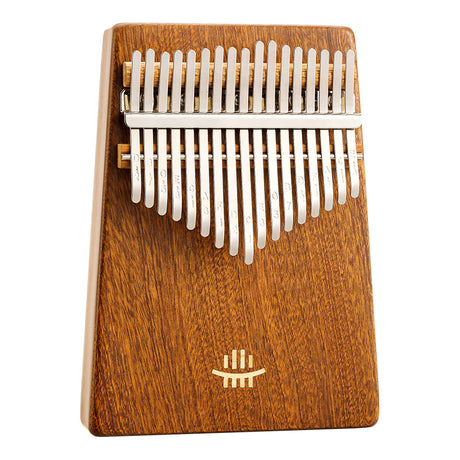
If you are a beginner, The 17-Key Kalimba (C Major) is almost always the right answer. It is the "Gold Standard" of the kalimba world.
- Universal Learning: 99% of the tabs (sheet music), YouTube tutorials, and apps are written specifically for the 17-key instrument.
- Perfect Size: It fits comfortably in both adult and teenage hands.
- Versatility: It has a range of over 2 octaves, which is enough to play most pop songs, movie soundtracks (like Ghibli or Disney), and classical melodies.
Verdict: If this is your first Kalimba, get a 17-key model. It is the safest and most supported choice.
The Upgrade: 21 Keys & Chromatic Models
Once you master the basics, you might crave more range. This is where advanced models come in.
21-Key Kalimba
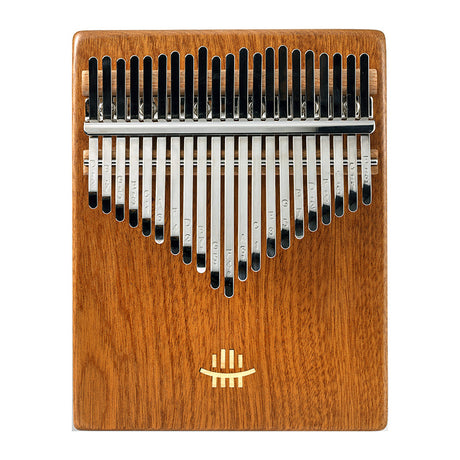
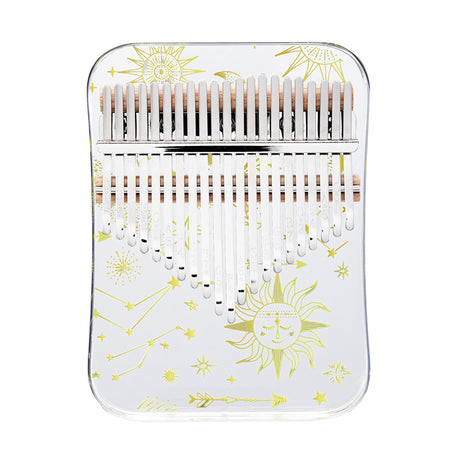
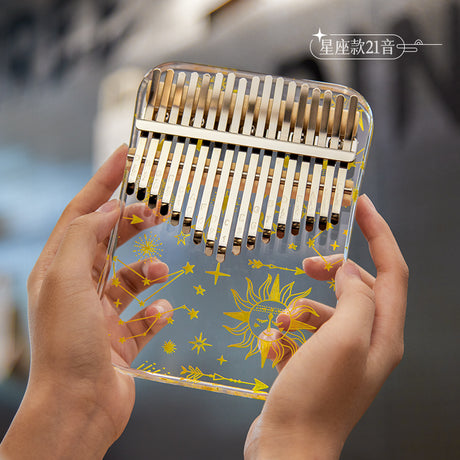
This looks very similar to a 17-key model but adds 4 extra bass notes in the center. It allows you to play deeper, richer chords. It is great for players who want to add more emotional depth to their covers.
34-Key / Chromatic Kalimba
A standard kalimba is like the white keys on a piano—it cannot play sharps or flats (#/b) without retuning. A Chromatic Kalimba (34 keys or more) has two rows of keys, giving you all the notes (white and black keys).
- Best For: Classical musicians, pianists, and advanced players who don't want to be limited by a single musical scale.
Body Shape: Flat Board vs. Hollow Box
The shape of the wood body changes the sound significantly.
Hollow Body (Resonance Box)
This has a sound hole in the front (like a guitar).
- Sound: Louder, warmer, and has a "wah-wah" effect if you cover/uncover the holes with your fingers.
- Best For: Performance and playing without a microphone.
Flat Board (Solid Body)
This is a solid piece of wood with no hole.
- Sound: Clearer, brighter, and has longer sustain (the note rings longer). It is quieter than the hollow version.
- Best For: Beginners (more durable), recording videos, and playing late at night without disturbing neighbors.
Material: Wood vs. Acrylic (The Look vs. The Sound)
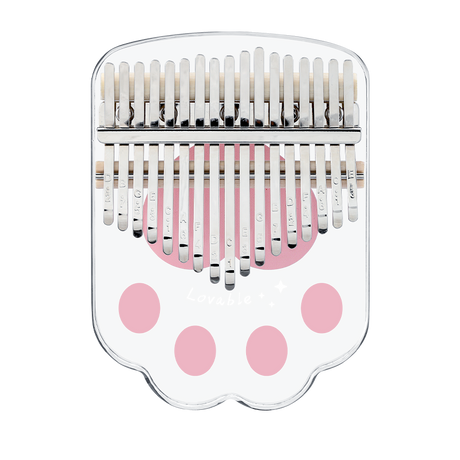
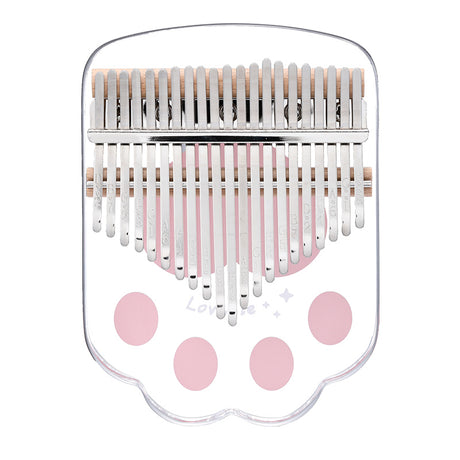
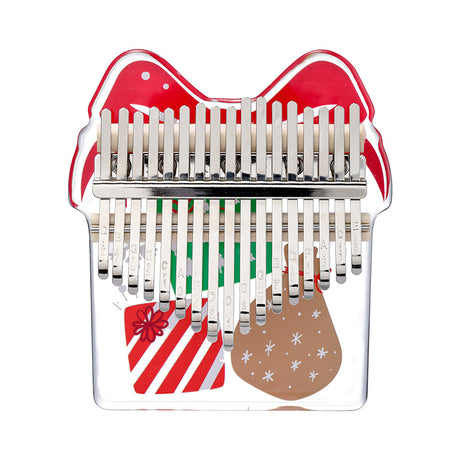
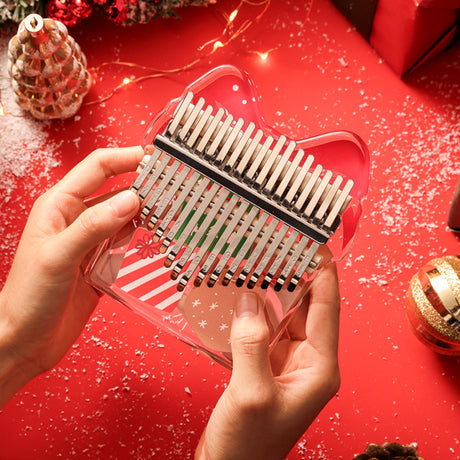
You have likely seen those stunning, transparent Acrylic Kalimbas on Instagram. They look like ice crystals, but how do they sound?
- Wood (Mahogany, Walnut, Koa): Produces a warm, earthy, and rich tone. It is lightweight and easy to hold for long practice sessions.
- Acrylic: Produces a sweet, quiet, bell-like tone (music box style). However, acrylic is much heavier than wood.
Advice: If you prioritize sound and comfort, choose Wood. If you prioritize aesthetics and cute looks for gifts, choose Acrylic.
Quick Decision Guide: Which One is For You?
Let's simplify your choice:
- "I want to learn songs from YouTube tutorials." -> Buy a 17-Key Wood Flat Board.
- "I want the loudest sound to play for friends." -> Buy a 17-Key Hollow Body.
- "I play piano and want to play complex jazz/classical." -> Buy a 34-Key Chromatic.
- "I want a beautiful gift for my girlfriend/child." -> Buy an Acrylic 17-Key or a mini 8-Key.
Conclusion
There is no "wrong" Kalimba, but choosing the right type makes learning much easier. At Hluru, we recommend most beginners start with a classic 17-key wooden model. It balances ease of use, sound quality, and affordability perfectly.
Ready to start your journey? Explore the different types in our collection below.
Frequently Asked Questions
Q: Is 17-key harder than 10-key?
A: Surprisingly, no. Because the instrument is slightly larger, 17-key kalimbas are often easier to hold. Plus, having more notes means you won't get bored as quickly.
Q: Can I play a 21-key kalimba if the tutorial is for 17 keys?
A: Yes! The center 17 keys are arranged exactly the same. You just ignore the extra bass keys.